
Commercial Grease Trap Smell: Causes, Solutions & Maintenance
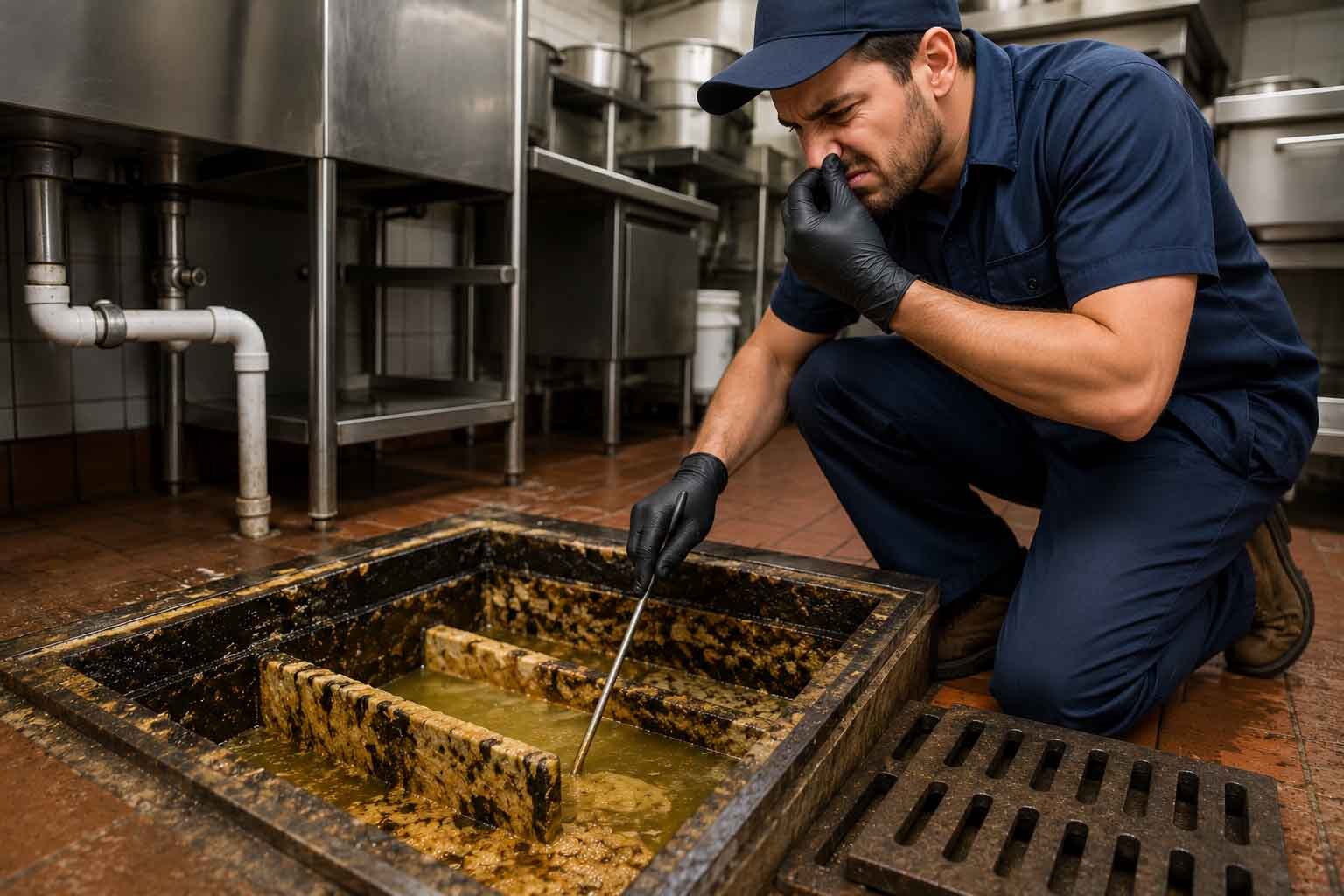
A commercial grease trap usually smells due to trapped fats, oils, grease, also known as (FOG), and food waste that start to decompose in a warm, oxygen-poor environment.
As bacteria break down organic material, they release foul-smelling gases such as hydrogen sulfide, methane, and fatty-acid vapors. To eliminate these odors and avoid costly plumbing problems, regular maintenance, including timely pumping and thorough cleaning, is essential. Read on to learn more about how these traps work and how you can keep your kitchen odor-free with grease trap service!
| Get Professional Grease Trap Service - Call (916) 726-5150 |
How Does a Commercial Grease Trap Work?
A grease trap works by separating fats, oils, grease (FOG), and food solids from wastewater before they enter the public sewer system.
This is what happens within the unit:
- Wastewater from sinks flows into the grease trap.
- Heavy food particles settle to the bottom.
- Grease and oils float to the surface.
- Cleaner water exits through the outlet pipe.
- The trapped grease and solids remain inside until they are professionally removed.
This can help prevent clogged sewer lines, wastewater backups, and costly plumbing repairs. But when a grease trap is not cleaned regularly, the organic waste builds up and creates the right environment for bacteria to grow.
Is a Smelly Grease Trap Normal?
As the grease trap is designed to collect food waste and grease, a slight odor around it is normal. But if the smell grows stronger and spreads across your kitchen, then it means that your grease trap needs professional attention.
Unpleasant odors are more than just an inconvenience for restaurant and commercial kitchen owners, as they negatively impact the customer experience, food safety inspections, and overall reputation. Let us try to understand how to resolve such an issue before it grows into an elaborate, expensive emergency.
Why Do Grease Traps Produce Bad Odors?
As mentioned previously, the grease trap is designed to trap the leftover food waste. As there is very little oxygen inside the tank, anaerobic bacteria thrive and produce gases that cause a bad smell.
According to the FOG (Fats, Oils, and Grease) management guidelines, grease traps should be properly cleaned before grease and solids exceed 25% of the total trap capacity. Following this guideline helps reduce odors, maintain proper flow, and protect the municipal sewer system.
Commercial Grease Trap Maintenance & Odor Prevention Schedule
| Frequency | Required Maintenance Action | How It Prevents Foul Odors |
| Daily |
|
Stops rotting at the source |
| Weekly |
|
Breaks down odor compounds |
| Monthly |
|
Contains the fumes |
| Every 1-3 Months |
|
Prevents grease souring |
| Annually |
|
Catches hidden blockages |
7 Warning Signs Your Grease Trap Needs Immediate Cleaning
Noticing the early warning signs can help you avoid expensive plumbing repairs and unexpected downtime:
-
Rotten Egg Odor
A strong sulfur smell is one of the earliest signs that food waste and grease are decomposing within the trap.
2. Slow Drainage
When grease builds up, wastewater can’t flow smoothly, resulting in slow drainage.
3. Grease Backup
Visible grease around drains or standing wastewater usually means the grease trap has reached its maximum capacity.
4. Regular Drain Clogs
If your sink keeps clogging, it means that your grease trap might no longer be separating grease properly.
5. Insect Activity
Organic buildup within the grease traps creates a perfect breeding environment for insects.
6. Sounds From Your Drains
Restricted airflow results in unusual sounds emerging due to grease buildup or blocked plumbing vents.
7. Failed Health Inspections
Excessive grease accumulation can result in compliance issues, unpleasant odors, and potential fines from local wastewater authorities.
What Happens When You Ignore a Smelly Grease Trap?
Many business owners assume unpleasant odors are a part of operating a commercial kitchen. But overlooking the warning signs can result in a much bigger problem, like:
- Recurring drain blockages
- Kitchen sink backups
- Emergency plumbing repairs
- Health Department Violations
- Customer complaints and negative reviews
- Pest infestations caused by decaying food waste
- Costly downtime during business hours
- Potential wastewater compliance penalties
How Much Does Commercial Grease Trap Cleaning Cost?
The cost of commercial grease trap cleaning depends on several factors, like:
- Grease trap size
- Amount of accumulated grease
- Ease of access
- Cleaning frequency
- Emergency or after-hours service requirements
Preventive maintenance is often the most cost-effective solution. Rather than delaying cleaning to save money, many businesses find that regular grease trap maintenance costs less than emergency plumbing repairs.
| Prevent Grease Trap Odors Today - Contact Us Now! |
How Can You Prevent Commercial Grease Trap Odors Long-Term?
The best way to remove grease trap smell is to prevent excessive grease and food waste from accumulating in the first place. A regular maintenance routine can keep your kitchen smelling fresh, protect your plumbing system, support compliance with local wastewater regulations, and help prevent costly emergency repairs.
You Can Follow This Grease Trap Maintenance Schedule
| Frequency | Maintenance Task | Benefit |
| Daily | Scrape food waste into the trash before washing dishes | Reduces food waste entering the grease trap |
| Daily | Wipe greasy cookware before rinsing | Reduces FOG buildup |
| Weekly | Apply a biological enzyme treatment (if recommended) | Helps break down organic residue naturally |
| Monthly | Inspect grease trap lids, seals, and surrounding plumbing | Detects leaks before odors escape |
| Every 1-3 Months | Schedule professional grease trap cleaning | Removes grease and sludge before capacity is exceeded |
| Annually | Have the entire grease management system inspected | Identifies hidden issues before they become expensive repairs |
Avoid These Common Mistakes
Most restaurant owners unintentionally worsen the odor problems by using harsh chemical drain cleaners or bleach, which can -
- Damage pipes and grease trap parts
- Disturb the natural bacteria that break down organic waste
- Increase long-term maintenance costs
- Shorten the lifespan of your plumbing system
Instead, follow the manufacturer-recommended routine and make professional grease trap service your main maintenance strategy.
Frequently Asked Questions
Takeaway
A foul-smelling grease trap is more than just an unpleasant nuisance, as it usually means that your grease management system requires attention. But most odor problems can be prevented with proper kitchen practices, routine inspections, and regular commercial grease trap cleaning. Staying proactive can help reduce the risk of plumbing emergencies, protect your employees and customers, maintain compliance with local wastewater regulations, and extend the life of your plumbing system.
Read More About:
- Grease Trap vs Interceptor: System Differences, Usage & Service Needs
- Restaurant Grease Trap Cleaning Services Near Me: Why Local Maintenance Matters
- Grease Trap Cleaning Guide: Importance, Common Causes, And Prevention
- Common Grease Trap Issues and How to Fix Them
Keep Your Commercial Kitchen Clean and Compliant With Advanced Septic Service, LLC
Whether you operate a restaurant, hotel, school cafeteria, healthcare facility, or any other commercial kitchen in Placerville or the surrounding communities, investing in preventive grease trap maintenance is one of the best decisions you can make for your business.
Do not allow grease trap odors to affect your reputation. Trust Advanced Septic Service LLC, a company with 25+ years of experience and trained pros, for a professional grease trap service in Placerville. We also provide hydro jetting Placerville and septic pumping Placerville to help keep your entire plumbing and wastewater system running efficiently.
Call (916) 726-5150 to schedule your grease trap service in Placerville and keep your kitchen working safely, efficiently, and odor-free.