
Is It Safe to Use Garbage Disposal With a Septic Tank?
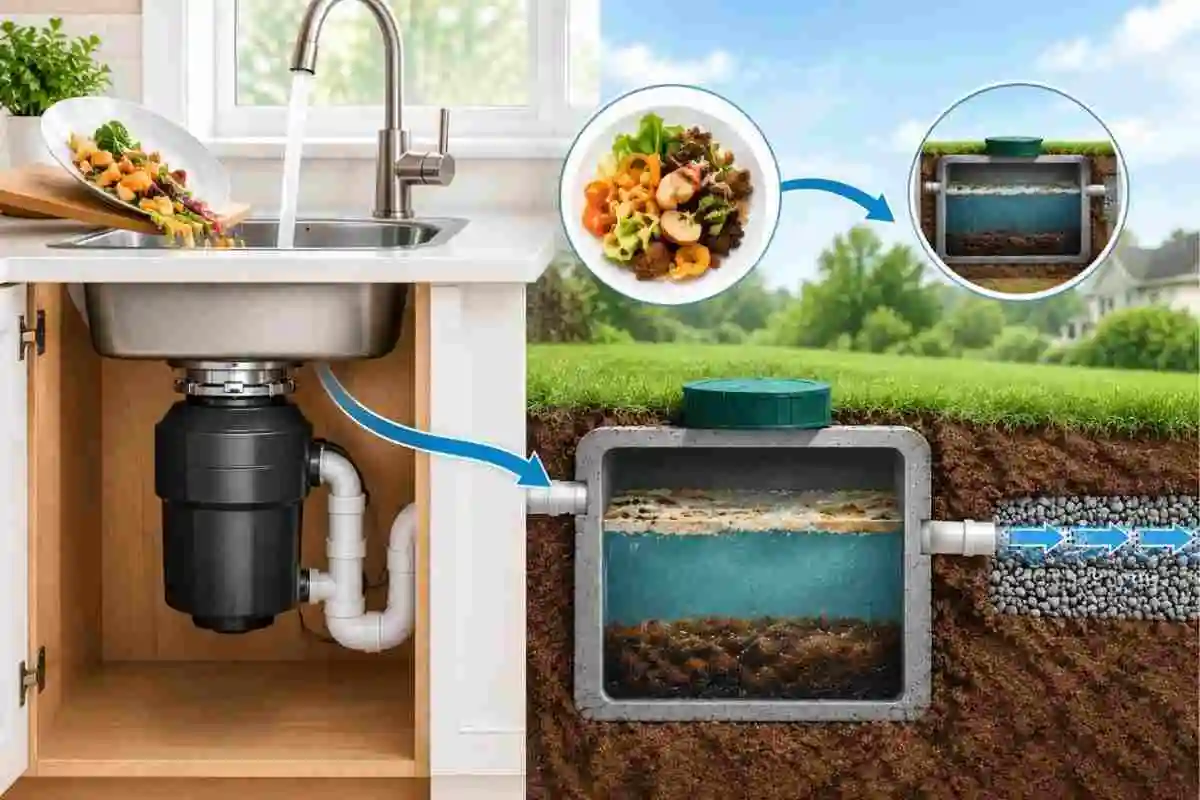
A garbage disposal makes kitchen cleanup easier. You scrape leftover food into the sink, turn on the disposal, and it's gone in seconds.
But where does that food actually go?
If your home uses a septic system, those ground-up scraps end up in your septic tank. And unlike a city sewer system, your septic tank has a limited capacity to handle waste.
So, is it safe to use a garbage disposal with a septic tank? Let's look at what happens inside your system, the risks involved, and how you can avoid expensive septic problems.
| Need Professional Septic Tank Service? - Contact Us Now! |
Should You Use a Garbage Disposal With a Septic Tank?
Yes, but it's generally better to avoid it or limit its use.
A garbage disposal won't automatically damage your septic system. However, frequent use adds food waste that your tank wasn't necessarily designed to handle.
The U.S. Environmental Protection Agency (EPA) recommends limiting garbage disposal use because food scraps increase the amount of solid waste collected inside the tank.
If you already have a disposal, you don't necessarily have to remove it. But using it for leftover meals, vegetable peels, and other kitchen waste every day can create problems over time.
You can scrape most food waste into the trash or compost bin and use your disposal only for small amounts of food left behind during cleanup.
How Does a Garbage Disposal Affect a Septic Tank?
A garbage disposal grinds food into tiny pieces, but it doesn't make those pieces disappear. Everything you grind travels through your kitchen drain and into your septic tank.
Inside the tank, solid waste settles at the bottom as sludge, while grease and other floating materials form a layer of scum. Bacteria break down some organic waste, but not all of it disappears.
When you frequently use a garbage disposal, extra food solids enter the tank faster than bacteria can digest them. Take a look at the potential risks of using a garbage disposal with a septic tank:
| Problem | Why It Matters |
|---|---|
| Faster sludge buildup | The tank may need pumping sooner |
| Plumbing clogs | Grease, starches, and fibrous scraps can block pipes. |
| Drain field damage | Excess solids may clog the pipes or soil that treats wastewater. |
| Higher maintenance costs | More frequent pumping or repairs may be needed. |
A garbage disposal does not automatically cause septic failure. The risk depends on how much food waste you send down the drain, your tank's capacity, and the condition of your system.
What Should You Avoid Putting in a Garbage Disposal With a Septic Tank?
Not everything that fits into your garbage disposal belongs there. Some foods can clog the disposal or pipes. Others add unnecessary waste to your septic system.
Here's what you should keep out of the drain.
| Food or Material | Why You Should Avoid It |
|---|---|
| Cooking grease and oil | Can build up inside pipes and contribute to the scum layer |
| Coffee grounds | Add solids that can settle in pipes and the septic tank |
| Eggshells | Shell fragments add material that breaks down slowly |
| Celery and corn husks | Fibers can wrap around disposal components |
| Pasta, rice, and oatmeal | Can swell or form thick, sticky clumps |
| Bones and fruit pits | May jam or damage the disposal |
| Large amounts of food scraps | Increase the waste entering your septic tank |
What about soft foods, such as small pieces of fruit or cooked vegetables? Your disposal may be able to grind them, but they still add solids to the tank. Throwing them away or composting them is usually the better choice.
How to Use a Garbage Disposal Safely With a Septic Tank
You don't have to stop using your garbage disposal completely. The important step to take is to keep as much food waste as possible out of your septic tank.
Here are a few habits that can help:
1. Remove Food Scraps Before Washing Dishes
Scrape leftover food into the trash or compost bin before putting plates in the sink. You can also use a sink strainer to catch smaller pieces.
2. Don't Use the Disposal for Large Amounts of Food
A few small scraps are one thing, but grinding an entire plate of leftovers puts extra waste into your septic tank. Avoid using the disposal when cleaning out your refrigerator or preparing large meals.
3. Run Enough Water When Using the Disposal
Your garbage disposal needs running water to help move ground-up food through the pipes. Follow the manufacturer's instructions, but don't leave the faucet running longer than needed.
4. Never Pour Cooking Grease Down the Drain
Grease can collect inside your pipes and cause clogs. Instead, let it cool and put it in a suitable container before throwing it away.
5. Consider Composting Food Scraps
If you regularly cook with vegetables and fruits, composting suitable scraps can be a good alternative. It also keeps unnecessary food waste out of your septic system.
| Keep Your Septic System Running Smoothly! - Schedule Now! |
How Often Should You Pump a Septic Tank if You Use a Garbage Disposal?
The EPA generally recommends having a household septic tank inspected every 1-3 years and pumped every 3-5 years, depending on the system and household.
However, homes that actively use garbage disposals often require septic tank cleaning and pumping every 1 to 2 years.
Your actual maintenance timeline depends on several factors:
- The size and condition of your septic tank.
- How many people live in your home?
- How much water your household uses.
- How frequently you use the garbage disposal.
- The amount of sludge and scum already in the tank.
Rather than guessing when your tank needs service, have a septic professional measure the accumulated solids during an inspection and then decide if you need a professional septic tank cleaning and Septic pumping. This helps you remove the collected waste before it leads to bigger problems.
When Should You Call a Septic Professional?
A garbage disposal isn't always responsible for septic problems. However, if your system is struggling, continuing to send food scraps down the drain won't help.
Watch for these warning signs:
- Several drains are slow: Wastewater may not be moving through your system properly.
- Sewage backs up: Wastewater coming back through toilets or drains needs immediate attention.
- Persistent sewage odors: Strong smells around the tank or drain field may indicate a problem.
- Wet patches near the drain field: Unusually soggy ground, especially during dry weather, may mean wastewater isn't draining properly.
If you notice these problems, stop using the garbage disposal and reduce water use until the cause is identified.
Don't open the septic tank or attempt to clear it yourself. Septic tanks contain dangerous gases and should only be handled by trained professionals.
An experienced septic technician can determine whether you need septic pumping, a plumbing repair, or another septic service.
Common Queries From Our Clients
Takeaway
A garbage disposal is convenient, but it also sends food waste into your septic system, which must be carefully maintained.
If you already have one, there's no need to panic. Use it sparingly, keep unsuitable waste out of your drains, and stay current with septic inspections.
If you're planning a new kitchen, consider whether a sink strainer and compost bin might be a simpler choice.
Read More About:
- Above-Ground vs Underground Septic Tanks: Pros, Cons & Key Differences
- Septic Tank Drain Field Problems: Causes, Signs, and Solutions
- Septic Tank Alarm Going Off? Causes, Fixes & Expert Tips
- Septic Tank Pumping: How Often Should You Schedule Service?
Keep Your Septic System Healthy With Advanced Septic Service LLC.
Not sure whether your garbage disposal is affecting your septic tank? Advanced Septic Service, LLC, can inspect your tank.
With more than 25 years of experience, Advanced Septic Service LLC has helped residential and commercial customers with septic pumping Rocklin.
We are proud to be a BBB-accredited team with an A+ rating. Our septic services also include:
- Septic tank cleaning
- Septic tank inspections
- Septic tank maintenance
- Emergency septic service
Our skilled technicians can assess your system's condition and help you plan maintenance based on its actual needs.
Whether you're due for routine service or dealing with a septic problem, we're here to help.
Contact us today at (916) 726-5150 to schedule service or request a free estimate.